
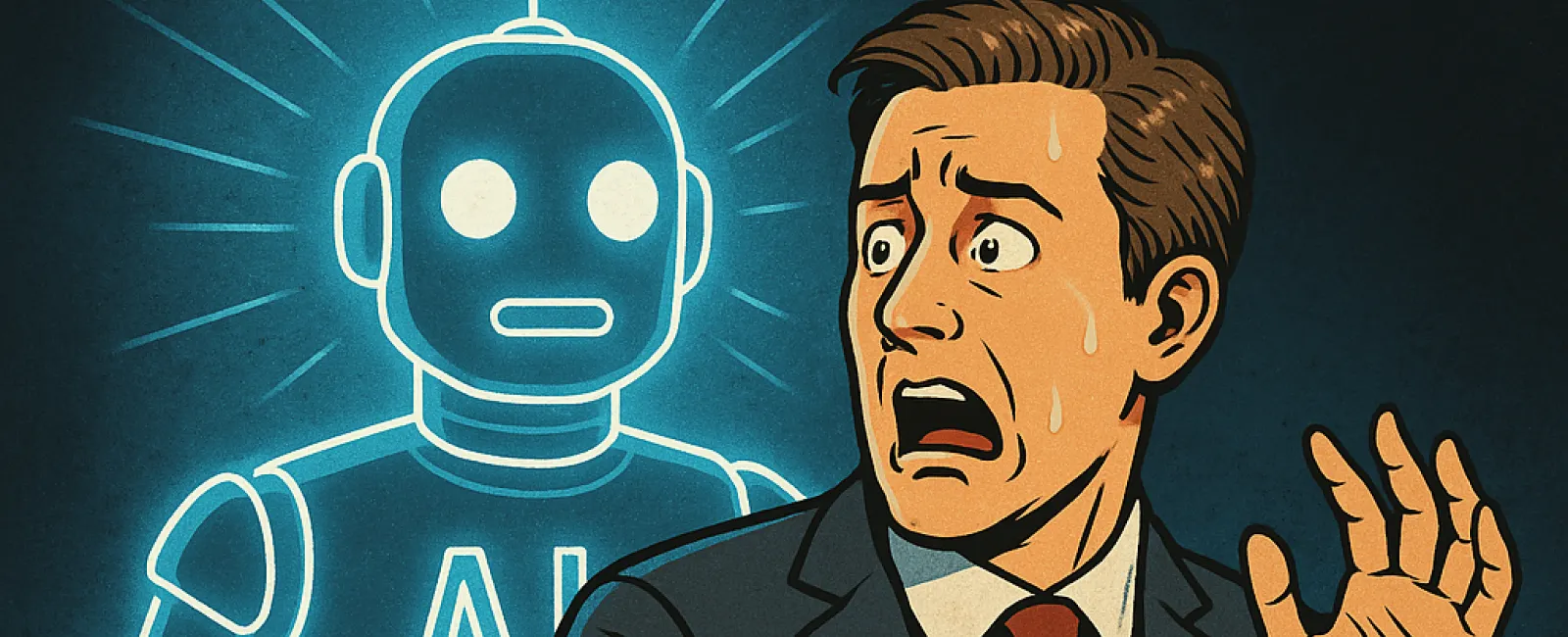
The rapid evolution of AI is transforming business landscapes in exciting yet potentially risky ways. While these advancements offer new opportunities, it's crucial to recognize that cybercriminals have equal access to AI technologies. Let's shed light on the hidden dangers you need to be aware of.
Beware of Video Chat Doppelgängers - The Rise of Deepfakes
AI-powered deepfakes have reached unsettling levels of realism, and attackers are leveraging them for sophisticated social engineering schemes targeting businesses.
A recent case involved an employee from a cryptocurrency foundation who joined a Zoom call with several deepfake impersonations of their top executives. These fabricated leaders instructed the employee to install a Zoom extension to enable microphone access, opening the door for a cyberattack linked to North Korea.
Such scams are disrupting traditional verification methods. To protect yourself, watch for signs like unnatural facial features, awkward pauses, or inconsistent lighting in video interactions.
Phishing E-mails Evolved - Stay Alert Against AI-Enhanced Attacks
Phishing remains a top threat, but now AI helps attackers craft emails that bypass usual red flags like poor grammar or spelling mistakes, making detection harder.
Many cybercriminals are also integrating AI to translate fraudulent emails and landing pages into multiple languages, scaling their reach globally.
Despite this, standard protection strategies are still effective. Implementing multifactor authentication (MFA) significantly limits unauthorized access, as attackers rarely possess your second verification device. Plus, ongoing security training empowers your team to recognize other warning signs, such as urgent or pressure-filled messages.
Malicious "AI Tools" - Deceptive Software Packed with Threats
Attackers often exploit AI's hype by creating fake AI tools that are laced with malware. These schemes frequently coincide with trending events or seasonal promotions like Black Friday.
For example, a TikTok account promoted "cracked software" methods to circumvent licensing for apps like ChatGPT using PowerShell commands. However, this operation was a front for distributing malware, as security experts later uncovered.
To safeguard your business, always rely on security awareness training and consult your Managed Service Provider (MSP) to evaluate any AI software before downloading or deploying it.
Take Control and Secure Your Business from AI Dangers
AI-driven threats—from deepfakes to sophisticated phishing and fake AI applications—are evolving rapidly, but with the right strategies, you can stay ahead and protect your organization.Click here or give us a call at 323-410-7785 to schedule your free 10-Minute Discovery Call today and let's talk through how to protect your team from the scary side of AI ... before it becomes a real problem.


